
President Museveni Orders One-Month Audit of Cattle Compensation Beneficiaries in Northern Uganda

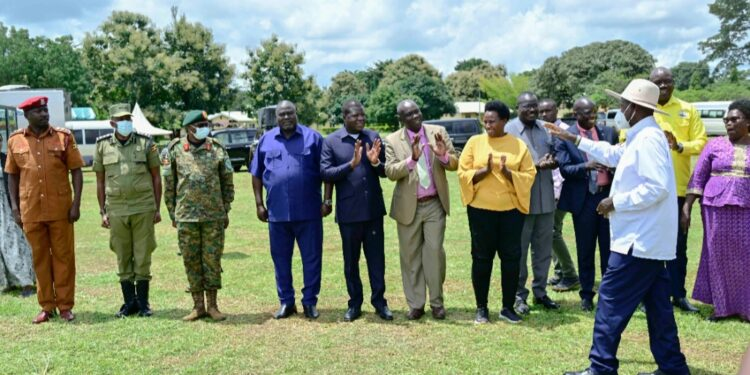
President Yoweri Kaguta Museveni has directed a one-month audit and verification exercise of all cattle compensation beneficiaries and pending claimants in Northern Uganda, as the government seeks to streamline the program into a unified rehabilitation plan.
“We give ourselves one month to study that,” he announced.
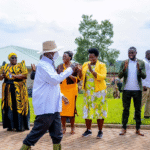
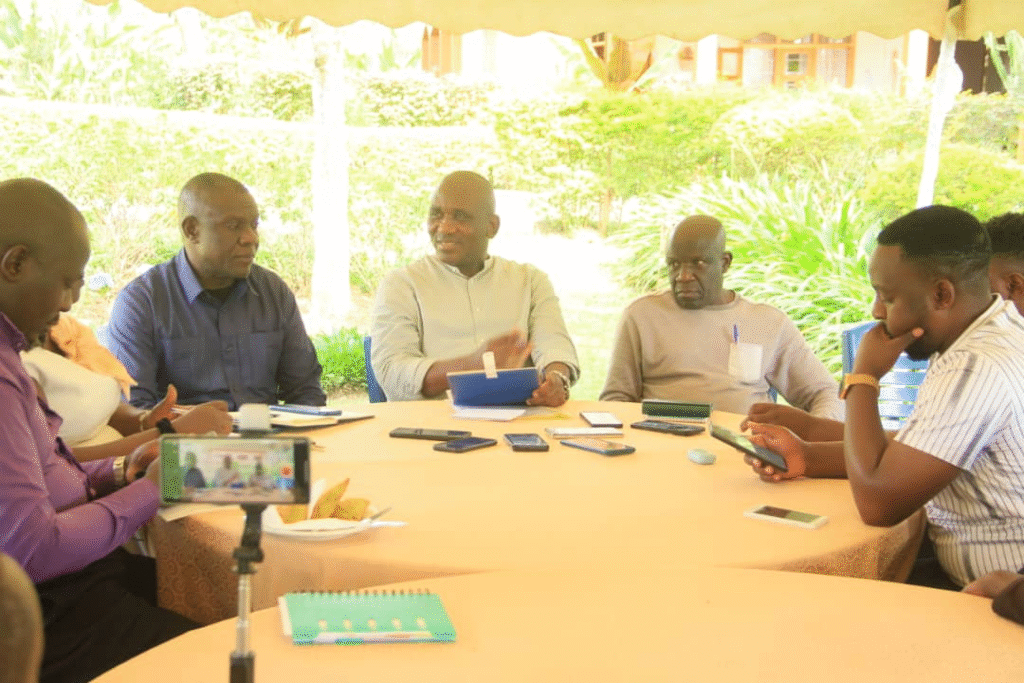
The directive came during a meeting with leaders from the Acholi subregion in Gulu District, where discussions centered on the progress and challenges of the cattle compensation scheme.
The President emphasized transparency by proposing that lists of both paid and approved beneficiaries be publicly displayed at the sub-county level.
“Let us all see the 4,000 who were paid in Acholi and how much they received, and also the 12,000 who are approved but not yet paid. That way, we can carry out mass verification and identify false claimants,” he explained.
He further noted that a similar approach should be adopted across all affected regions—Acholi, Lango, and Teso—to ensure that government support reaches every family fairly.
The compensation initiative, launched in 2022, targeted families that lost cattle during the 1970s insurgencies and the Lord’s Resistance Army (LRA) conflict. So far, over 28,000 people have been paid, while payments to 16,000 others are pending in the next budget. However, an additional 12,000 claimants have recently emerged, raising concerns of inflated or fraudulent lists.
President Museveni criticized the initial handling of the exercise, which he said left room for corruption and exploitation.
“We have already spent Shs150 billion on 28,000 people, yet another Shs500 billion is being demanded. Should we continue like this or adopt a different method?” he asked.
He stressed that the initiative should not be perceived as “compensation” but rather as rehabilitation, since the losses resulted from war and insecurity that affected entire communities.
“In other parts of the world, you cannot compensate for war or natural disasters like earthquakes,” he remarked.
Turning to politics, the President urged Acholi communities to shun sectarian leaders, warning that divisive politics based on tribe or religion undermines national unity.
“Once you bring the politics of tribe and religion, the first casualty is democracy. No single tribe or religion can dominate Uganda’s politics,” he said.
He also appealed for collective support in implementing free education, warning that leaders who frustrate Universal Primary Education (UPE) are denying children a future.
“Please, in the coming term, let’s prioritize free education in government schools. Budgeting should be guided by prioritization,” he advised.
During the meeting, Justice and Constitutional Affairs Minister Hon. Norbert Mao acknowledged that Acholi had suffered due to poor politics and insecurity, which forced families to sell food instead of livestock, leading to food insecurity. He also raised concerns about the confusion brought by lawyers and opportunists in the compensation process.
Minister of State for Northern Uganda, Dr. Kenneth Omona, praised the President for promoting wealth creation programs that have transformed lives in Acholi.
“If there’s anyone who hasn’t heard your message, Your Excellency, then they are either underage or in prison—and even those in prison have heard it,” Dr. Omona remarked.
Kilak North MP Hon. Anthony Akol, reading a memorandum on behalf of Acholi leaders, commended the government for peace, stability, and development programs such as the Parish Development Model (PDM) and Emyooga. He further applauded executive orders on charcoal trade and Balaalo herdsmen, noting that nearly 20,000 head of cattle had already been driven out of Acholi.
However, he urged continued monitoring, as some Balaalo remain defiant, and called for a broader rehabilitation package to also cater for war victims who suffered injuries.
Acholi Paramount Chief, Rwot David Onen Acana II, noted that despite an estimated Shs3.8 trillion injected into Northern Uganda rehabilitation over the years, the impact has been minimal due to corruption, weak governance, and poor fund absorption.
He outlined community mobilization initiatives across Acholi chiefdoms aimed at boosting production, addressing harmful cultural practices, and promoting the Acholi language. He also praised government’s infrastructural development and anti-poverty programs, pledging to mobilize communities to benefit from and properly use the funds.