
President Museveni Reiterates Call for Unity in the NRM, Warns Against Sectarianism

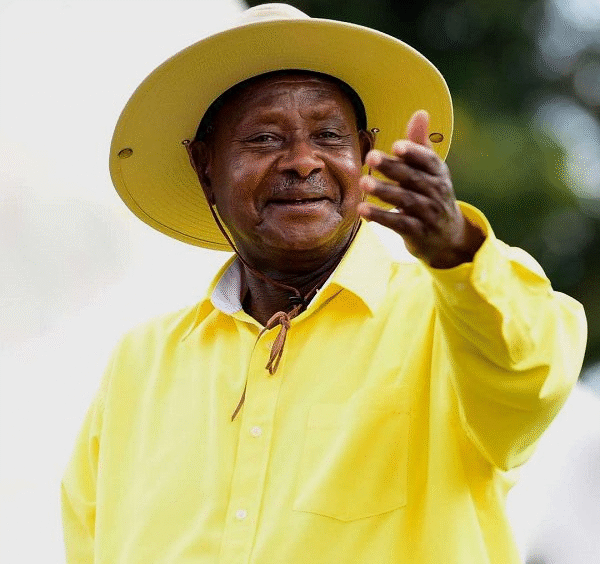
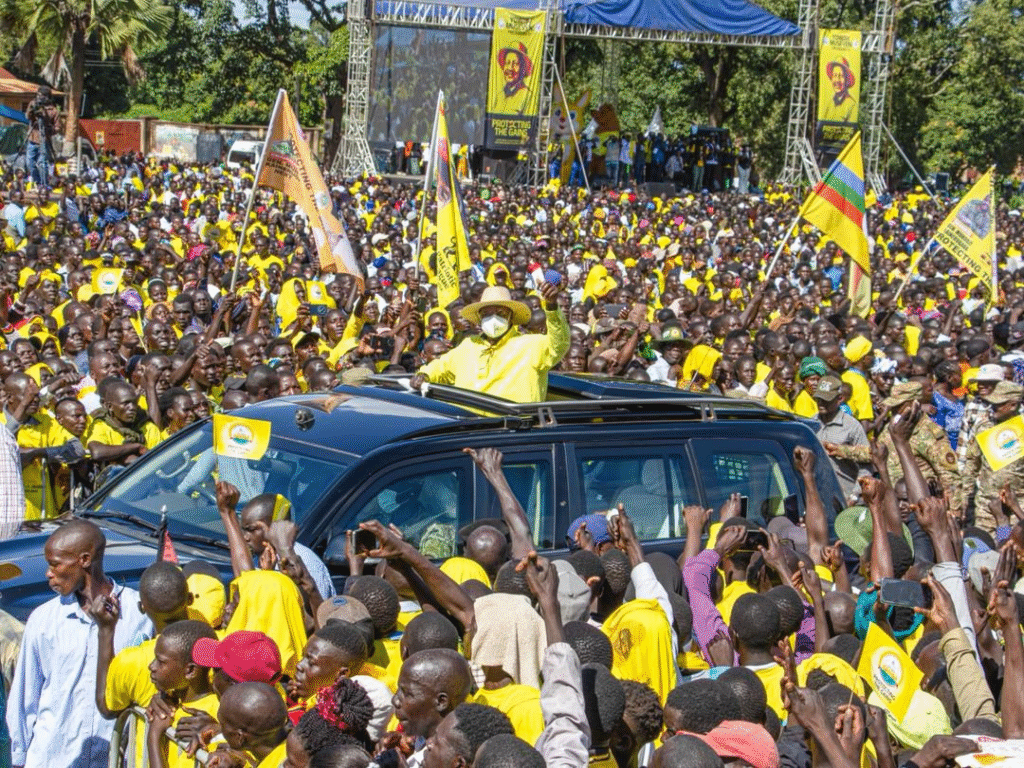
KAMPALA – President Yoweri Kaguta Museveni has once again emphasized the need for unity within the National Resistance Movement (NRM), cautioning against opportunistic and sectarian groups that, he says, have historically hindered Uganda’s development.

In his second statement reflecting on the recently concluded 4th NRM National Conference at Kololo, Museveni—who also serves as the NRM national chairman—cited multiple historical examples of how fragmentation undermined Uganda’s political stability and progress.
Lessons From History
Museveni recalled that by the time of independence in 1962, Uganda was already divided along sectarian political lines: the Democratic Party (DP) for Catholics, the Uganda People’s Congress (UPC) for Protestants and some Muslims, and Kabaka Yekka (KY) for Buganda Protestants and Muslims.
This division, he noted, prevented any party from gaining an outright majority, forcing UPC into a short-lived and “unprincipled alliance” with KY. The collapse of that alliance led to political turmoil and armed conflict, culminating in the crises of 1966 and 1971.
By 1979, following Idi Amin’s fall, the country had lost more than 500,000 lives, while basic necessities like soap, salt, paraffin, and clothes were scarce. According to Museveni, these hardships were direct consequences of Uganda’s fragmented leadership.
The NRM Consensus
Museveni recounted how, after the disputed 1980 elections, the armed struggle began with widespread public support. The February 6, 1981, attack on Kabamba marked the start of the National Resistance Army (NRA) insurgency, which eventually drew in Ugandans from across former political divides—DP, UPC, KY, and others.
“The broad consensus of about 80% of Ugandans who rallied around the NRA has endured,” Museveni said, pointing to the NRM’s 76% victory in the 1996 elections as evidence. He stressed that this unity was built on the party’s four ideological principles: patriotism, Pan-Africanism, socio-economic transformation, and democracy.
He also highlighted how the NRA integrated former adversaries, including ex-UNLA soldiers and other armed groups, into its ranks, creating a strong, unified national army. “Unlike the past, no soldier in the UPDF has ever died because of intra-army sectarian conflicts,” he noted.
Call Against Sectarian Politics
Museveni condemned recent sectarian sentiments raised during internal NRM contests, particularly regarding the CEC Vice-Chairpersonship for Buganda. He dismissed claims about candidates’ ethnic origins, urging members to focus on capability and dedication instead of tribal identity.
“The strength of the NRM lies in principled unity without discrimination,” he stressed, adding that allegations of land-grabbing and other misconduct would be addressed institutionally, not along ethnic lines.
Final Word
Museveni concluded his message by reminding Ugandans, particularly the younger generation (Bazzukulu), that the NRM’s historical success has been grounded in inclusivity and shared struggle. He reaffirmed his commitment to safeguarding that legacy against sectarianism and opportunism.
Signed:
Yoweri Kaguta Museveni
NRM National Chairman (Ssabalwanyi)