

President Museveni Urges Public Servants to Resist Corruption and Advance Uganda’s Development Agenda

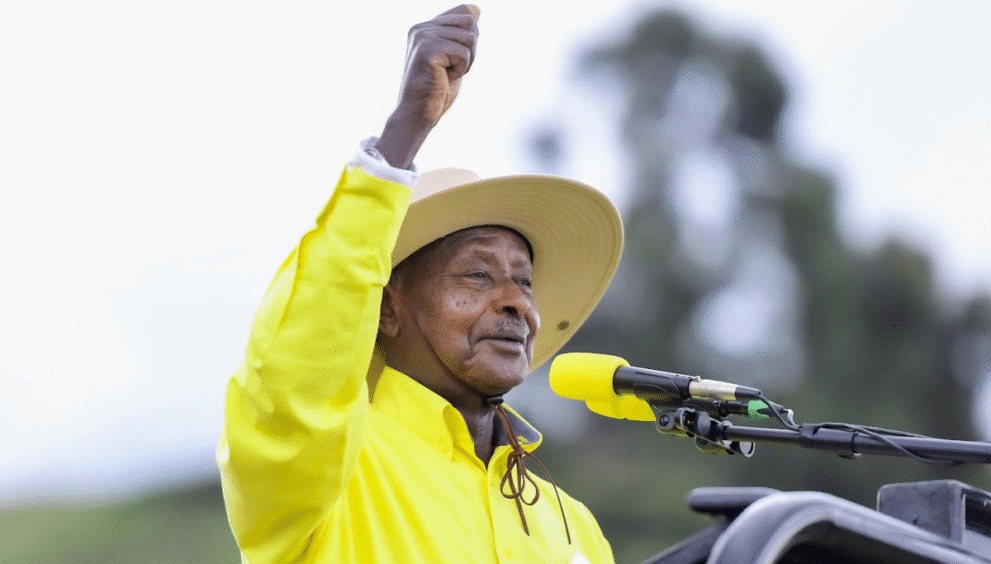
Kampala, Uganda— President Yoweri Kaguta Museveni has issued a stern call to all public servants to reject corruption and play an active role in the implementation of government programs aimed at transforming Uganda’s economy. His message was delivered by Prime Minister Rt. Hon. Robinah Nabbanja during the 14th Africa Public Service Day celebrations held at Kololo Independence Grounds.
The event, which brought together government officials, civil servants, development partners, and citizens, was held under the continental theme “Enhancing the Agility and Resilience of Institutions to Achieve Equitable Governance and Rapidly Address Historical Service Delivery Gaps.”
A Strong Stance Against Corruption
In his address, President Museveni reiterated his longstanding warning against corruption, describing it as a parasitic force draining Uganda’s progress and undermining public trust.
“Please desist from all forms of corruption. Corruption slows down Uganda’s development,” Museveni said. “It will not be tolerated by the patriots who fought for Uganda’s liberation.”
He underscored that the National Resistance Movement (NRM)’s liberation struggle was rooted in principles of integrity and accountability. “Corruption cripples service delivery and discourages investment. We must not allow it to take root,” he added.
Public Service: A Pillar of Transformation
President Museveni highlighted the pivotal role the public service plays in realizing the NRM’s pro-people agenda. He called on civil servants to ensure effective implementation of key social programs such as free education, improved healthcare delivery, and poverty eradication initiatives like the Parish Development Model (PDM).
“The transformation Uganda has achieved since 1986 is due to deliberate investments in security, infrastructure, and strategic sectors like agriculture, industry, ICT, and services,” he said. “When the NRM took power, the country lacked functioning institutions. Today, we have built roads, power plants, and industrial parks across the country.”
These developments, Museveni said, have enabled the country to achieve surplus production in several sectors, including maize, milk, bananas, and eggs. He urged public institutions to align themselves more effectively to ensure that services reach all citizens efficiently.
Advancing a Market-Driven Economy
Museveni reaffirmed Uganda’s commitment to a market-oriented economic model that connects domestic production to regional and continental markets.
“A modern economy is based on commercial agriculture, industry, ICT, and services—all underpinned by an efficient public service,” he said. Uganda, he added, offers a favorable investment climate supported by peace, modern infrastructure, and access to markets both locally and continentally.
Programs such as the Uganda Development Bank, Emyooga, and the Youth Livelihood Fund were cited as examples of government initiatives to provide affordable credit and enhance productivity.
Driving Reforms and Efficiency
Hon. Wilson Muruli Mukasa, Minister for Public Service, acknowledged improvements in transparency and efficiency through automation but stressed the need for deeper reforms.
“We must do more with less,” he said. “Let us move away from working in silos. The program-based approach in NDP III is a step in the right direction toward whole-of-government implementation.”
He called on Ministries, Departments, and Agencies (MDAs) to digitize their services fully and eliminate access barriers, especially for marginalized communities.
Addressing Service Delivery Gaps
In his keynote address, Dr. Gerald Karyeija, a governance expert, emphasized structural weaknesses in Uganda’s public service, especially in underserved regions such as Karamoja and West Nile.
“Service delivery performance in some districts remains below 30%,” he noted. He pointed to inefficiencies such as low budget absorption, underfunding, and duplicated mandates. Between FY2016/17 and FY2020/21, over UGX 9.4 trillion in public funds went unspent, while supplementary budget requests increased significantly.
Dr. Karyeija recommended a comprehensive reform strategy incorporating agile governance, digitization, performance-based financing, and participatory budgeting to enhance accountability and impact.
Restoring Public Trust Through Inclusion
Hon. Grace Mary Mugasa, Minister of State for Public Service, emphasized the need for citizen-centered, forward-looking public service. She highlighted digital innovation, interagency collaboration, and community engagement as key priorities.
“This year’s celebration is not only a reflection but also a demonstration of what responsive public service should look like,” she said. Citizens were invited to access services at Kololo, including passport processing, land inquiries, and health checks.
Pre-event activities included sports competitions, outreach programs, and mentorship initiatives aimed at bridging the gap between government and communities.
Toward Resilient Institutions
Dr. Karyeija proposed the establishment of regional training centers and digital monitoring systems to equip local governments with tools for data-driven, context-specific service delivery. Minister Muruli Mukasa pledged to adopt performance tracking systems and promote coordinated implementation through inter-agency task forces.
“We are committed to a whole-of-government approach to ensure inclusive and efficient service delivery,” he stated.
About Africa Public Service Day
Africa Public Service Day is commemorated annually across African Union member states to recognize the value of public service in development. While the global United Nations Public Service Day is marked on June 23, Uganda celebrated the event in alignment with its local schedule and extended programming.
The origins of the commemoration trace back to early Inter-African Public Administration Seminars held in Botswana (1970) and Sierra Leone (1971), which underscored the need for competent and visionary public service as a foundation for Africa’s progress.