
President Museveni Orders Criminalisation of Free-Range Grazing, Moves to Resolve Balaalo Land Crisis


ENTEBBE, June 25, 2025 – President Yoweri Museveni has instructed Attorney General Kiryowa Kiwanuka to draft legislation criminalizing the practice of free-range grazing in Uganda. The directive is part of new efforts to address long-standing tensions surrounding the Balaalo herdsmen in Northern Uganda.
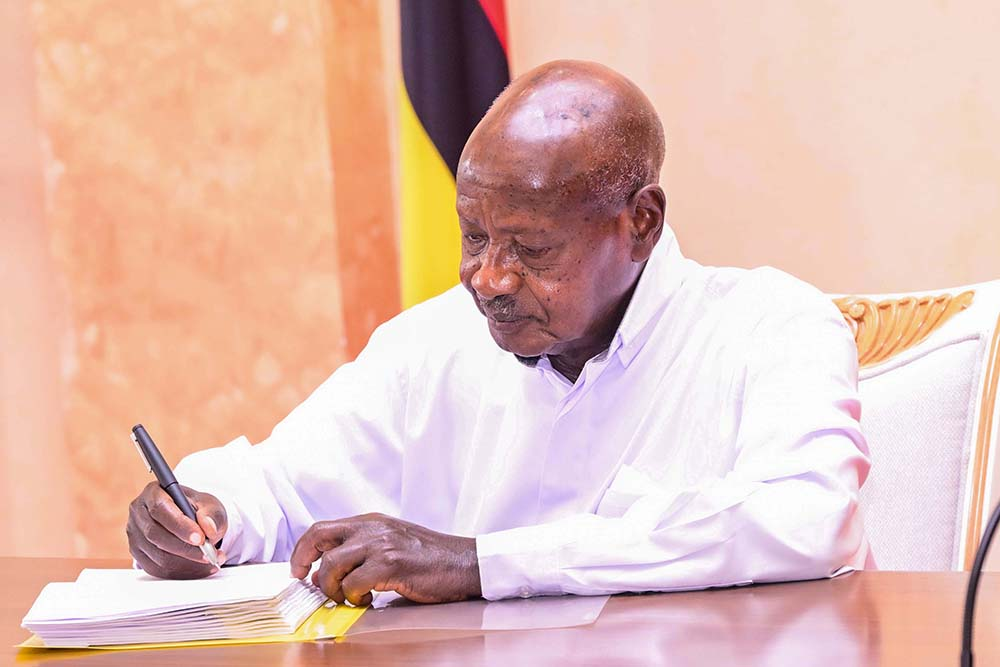
The order was issued in Executive Order No. 2 of 2025, which outlines stringent measures to regulate livestock movement and resolve land-related conflicts—especially in the Acholi sub-region. The President cited persistent issues caused by the unregulated migration of cattle herders into Northern, Eastern, and Northwestern Uganda, including crop destruction, community disputes, and blocked access to water sources.
Key Issues Behind the Ban
President Museveni identified four major problems caused by the Balaalo’s presence:
- Lack of fenced grazing areas.
- Absence of permanent water sources within the farms.
- Ongoing disputes due to communal land ownership.
- Blocking traditional access to key water bodies like the River Nile.
He emphasized that these issues create conflict, threaten local livelihoods, and, in some instances, result in violence and land disputes.
Committee to Vet Land Ownership Claims
To differentiate between lawful and unlawful land occupants, the President has announced the formation of a special committee. This body will assess claims of legitimate land ownership by the Balaalo and determine whether
- Farms are properly fenced.
- Permanent water sources exist within the properties.
- Access to traditional water routes remains unimpeded.
This verification process will begin only after all livestock are removed from contested areas to avoid interference and conflict during assessment.
Enforcement Timeline
The directive follows a two-week ultimatum issued by the State Minister for Northern Uganda, Dr. Kenneth Omona, on May 23. The eviction of herdsmen is to be executed in three phases over 65 days, starting today, June 25, 2025.
Broader Regional and Strategic Implications
While reiterating his belief in the core NRM principles of patriotism, Pan-Africanism, socio-economic transformation, and democracy, President Museveni warned against unregulated rural migration. He noted that the transfer of outdated farming practices and land misuse from one rural area to another under the guise of land scarcity is misleading and disruptive.
He called for controlled integration across East Africa that emphasizes the free movement of goods, services, labour, and capital—but with regulation on rural-to-rural migration, which often leads to land conflict and social tension.
Museveni gave examples of successful urban integration and investments, highlighting the importance of focusing rural migration vertically (rural-to-urban) rather than horizontally (rural-to-rural) to avoid social friction.
Caution Against Land Misuse
He also reminded citizens that many landless cattle owners were previously resettled through government ranch programs. He cautioned that people who sold their land should not expect government compensation and suggested they reinvest in more sustainable ventures such as small-acre model farming or businesses.
Finally, Museveni emphasized that the Uganda Land Commission’s powers were limited by design, with District Land Boards taking the lead to prevent national-level conflicts. He warned against repeating historical injustices that led to internal displacement and land grabs, vowing that such unfairness would not be tolerated under the NRM government.