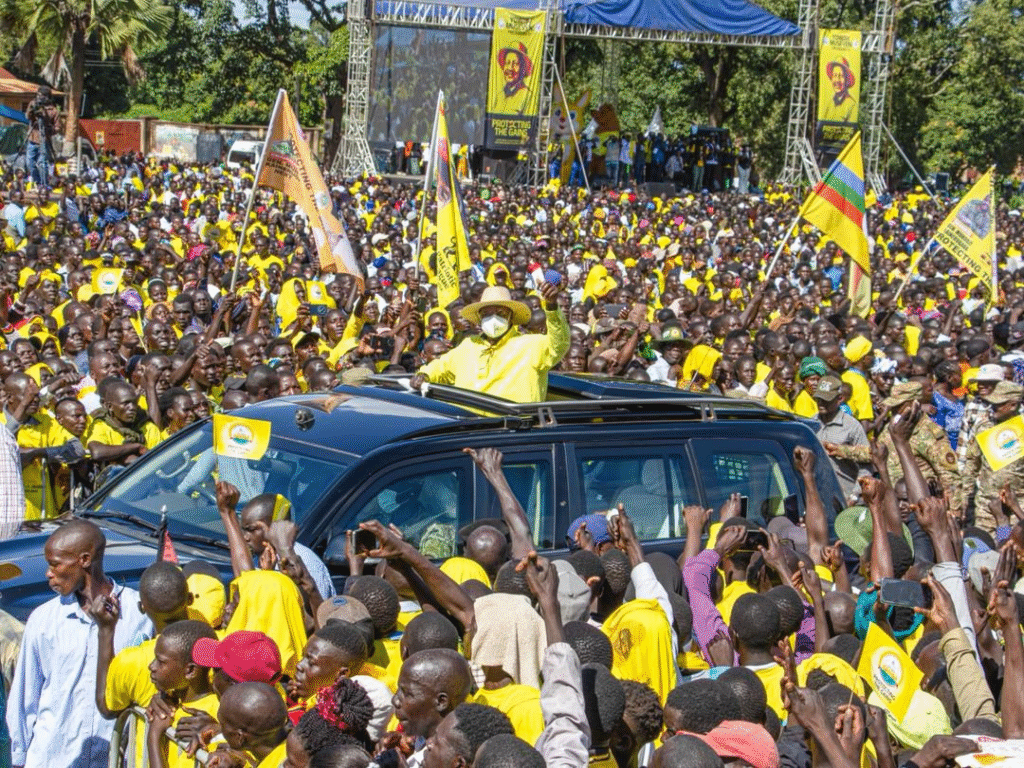
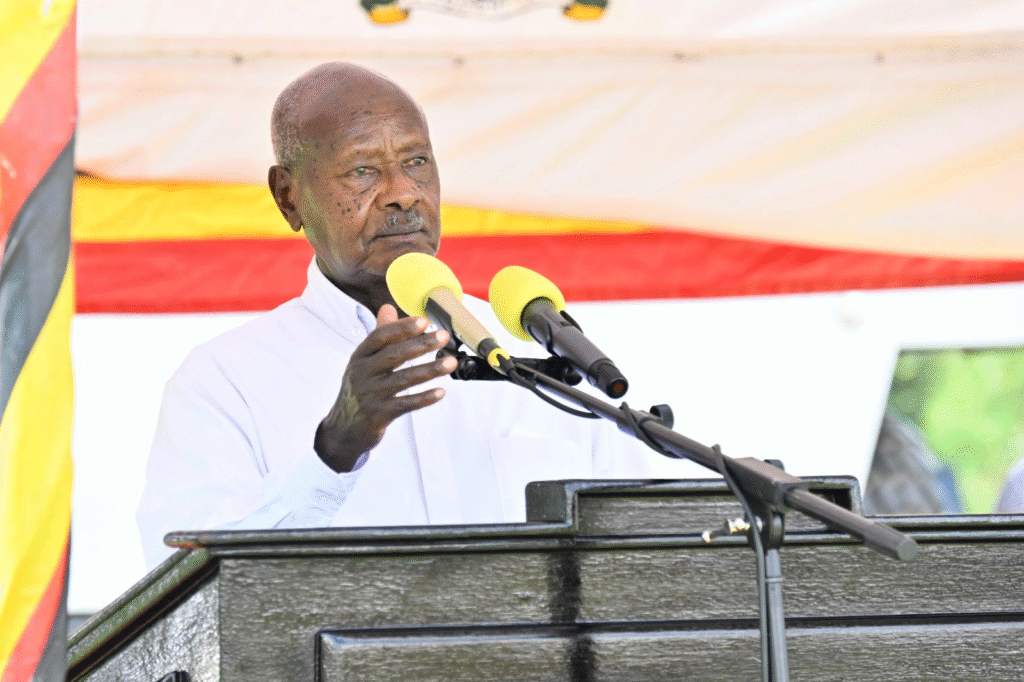
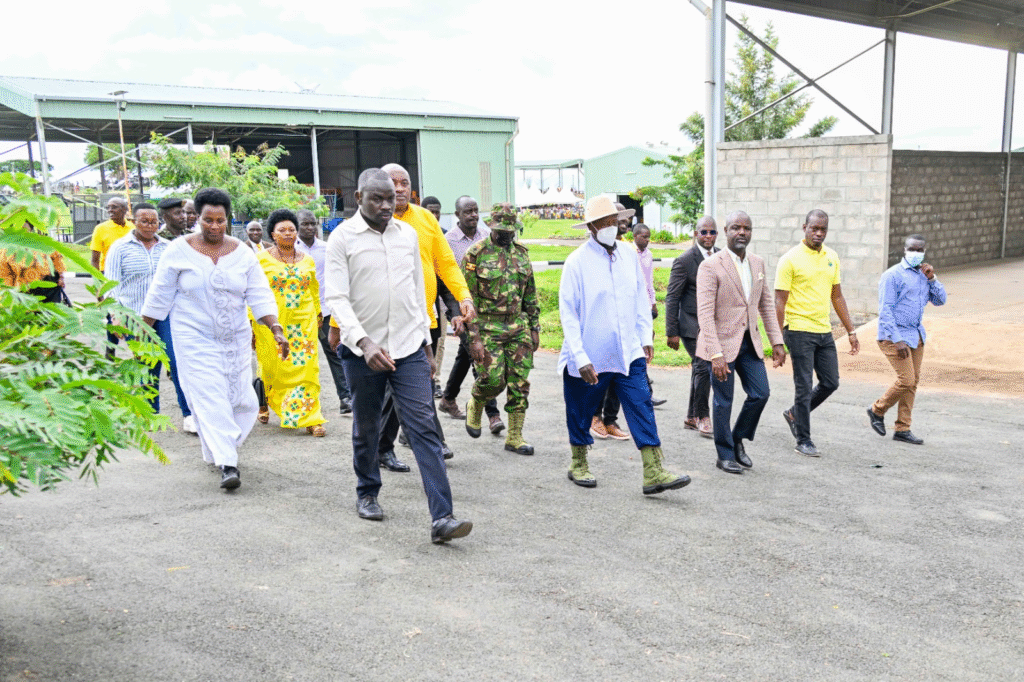
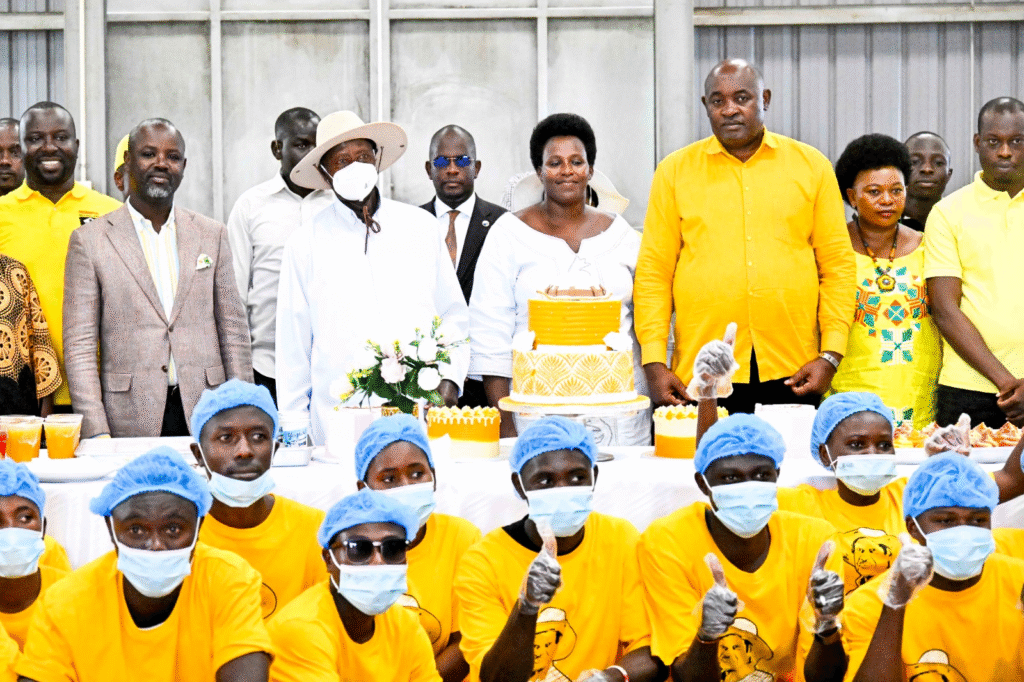
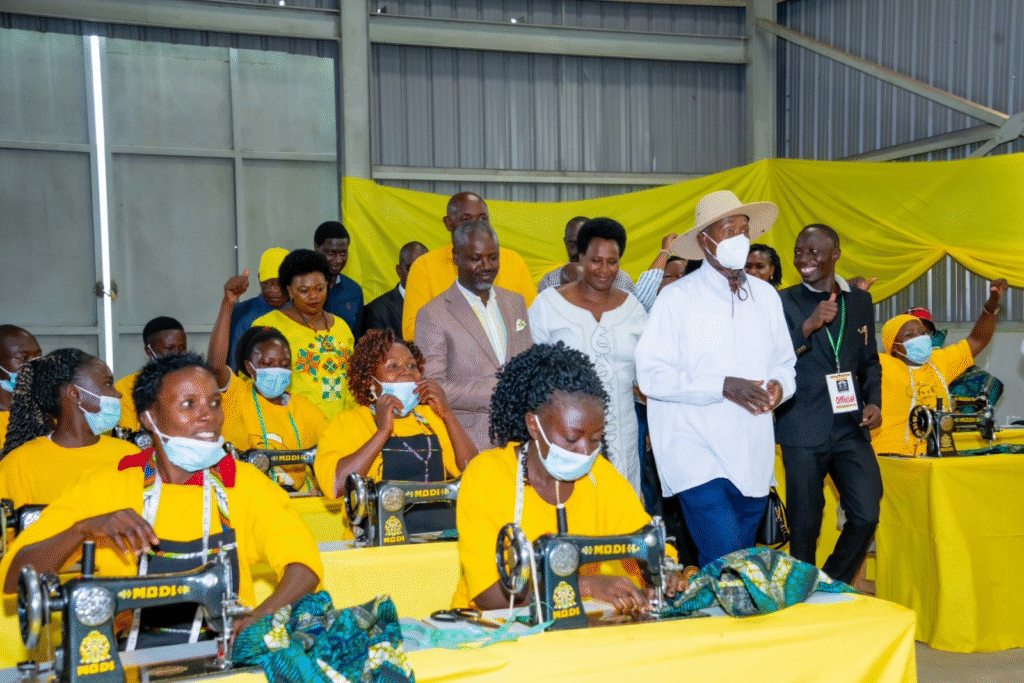
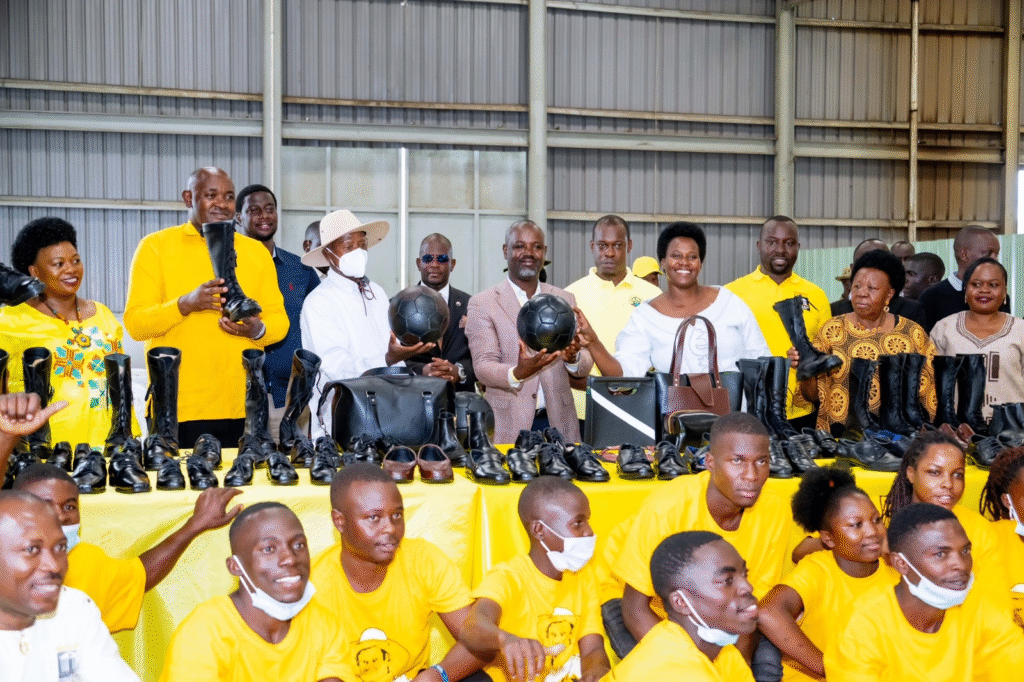
President Yoweri Kaguta Museveni today officially launched the Rwenzori Zonal Presidential Skilling Hub located in Mubuku Town Council, Kasese District. This initiative is part of the government’s broader effort to equip Ugandan youth with practical, job-creating skills.
During the launch, the President emphasized that the National Resistance Movement (NRM) was founded to okukyenuura—to uplift people from poverty. He described the Skilling Hubs as an essential pillar in this mission, complementing the Parish Development Model (PDM) by offering knowledge and hands-on training to youth.
“The NRM’s purpose is to lift people out of poverty. While the Parish Development Model supports families economically, these hubs provide the knowledge needed to sustain progress,” the President stated.
Drawing from his own life, President Museveni explained how education radically transformed his thinking and inspired his push for universal access to schooling.
“My father and grandfather were cattle keepers. We had cows, but without education, our quality of life was poor,” he said. “When I reached A-Level, I began to wonder—why can’t Uganda or Ankole become like Europe? That was the power of education.”
This realization led to the NRM’s 1996 push for free education through Universal Primary and Secondary Education (UPE and USE). However, he noted with concern that these programs faced local resistance and poor implementation.
“In places like Ntoroko, only 30% of children who begin nursery school complete Primary Seven. That is unacceptable,” he said. “I am now leading a new resistance—resisting those who blocked free education. That’s why we’re establishing these Skilling Hubs.”
Unlike UPE and USE, the Skilling Hubs are fully residential and offer comprehensive support—including food, accommodation, and healthcare—ensuring that learners receive focused, high-quality training.
The President also directed State House Comptroller Ms. Jane Barekye to plan for the expansion of the hubs to accommodate at least 500 learners and broaden the range of available trades, including plumbing, motor mechanics, electrical installation, and weaving.
To support graduates, he announced that financial assistance would be provided through district-level SACCOs, making startup capital more accessible.
“Training will remain zonal, but SACCOs will be at the district level to ease access to funds,” he said.
Reflecting on the historical roots of the NRM, President Museveni recalled that it emerged from a student movement in the 1960s that rejected tribal and religious discrimination—particularly in the Rwenzori region.
“When Timothy Bazaramusa, a Mukonjo, was blocked from becoming Katikkiro of Tooro, it exposed the dangers of identity politics,” he noted. “We chose to fight for the real needs of people—not tribe or religion.”
He urged Ugandans to focus on fundamentals such as food, clothing, shelter, and health, noting that these are the true foundations of development—not mere academic qualifications.
“Yes, I studied Shakespeare, but that won’t feed you. Let’s go back to the basics,” he said.
Deputy Speaker Pledges Parliamentary Support
Deputy Speaker of Parliament, Rt. Hon. Thomas Tayebwa, commended the initiative, calling the Skilling Hubs a powerful tool for empowering youth and reviving lost dreams.
“These young people, once school dropouts, now have hope and are becoming job creators,” Tayebwa said. “This initiative should have come earlier, but now that we’ve seen its impact, Parliament will give it full support.”
Local Leaders Praise the Initiative
Kasese RDC Lt. Joe Walusimbi described the hub as a “fountain of opportunity” and a “game-changer” for the Rwenzori sub-region. He noted that 897 youths—378 females and 519 males—have been trained so far, with 240 new trainees enrolled every six months. The hub has also created 37 direct jobs.
“This is a true investment in our future and a driver of the transition to a money economy,” Walusimbi said.
Success Stories from Beneficiaries
Ms. Masika Shawin Plikeria, a former Senior Six graduate unable to pursue higher education due to financial constraints, enrolled in the baking course at the hub. After completing training, she launched her own business and now bakes wedding cakes, earning steady income and saving 40% of her profits. She has since enrolled in university to study agriculture and pays her own tuition and rent.
“The mindset training changed me. I can now confidently speak to clients, and I was even elected Guild President at university,” she shared.
Mr. Thembo Rabson Kainji joined the carpentry program after learning about the hub at his father’s funeral. He later co-founded a carpentry workshop with fellow graduates, now serving as a community model for what vocational skills can achieve.
“The community trusted our skills. That inspired us to start a business, and it’s growing steadily,” he said.
The event was attended by Hon. Chris Baryomunsi (Minister of ICT and National Guidance), Ms. Jane Barekye (State House Comptroller), and other local leaders.